Beginner Outdoor Climbing Classes
From Gym to Crag: Your Guide to Beginner Outdoor Climbing Classes
So, you’ve spent the last few months pulling plastic in the climbing gym. You’ve mastered the 5.9 on the colorful auto-belays, your forearms are finally starting to look like Popeye’s, and you’re feeling pretty good. But then you look out the window at the actual mountains and wonder: How do I take this show on the road?
Transitioning from the gym to the “crag” is a rite of passage. It’s more than just a change of scenery; it’s a whole different game. If you’re thinking about signing up for an outdoor climbing class, here is everything you need to know before you tie in.
Why Take a Class? (The “Real” Benefits)
While you might have a friend who “knows a guy” who can teach you, professional instruction is worth every penny. Here’s why:
- Safety First: In the gym, the bolts are inspected and the floors are padded. Outdoors, you have to worry about loose rock, weather, and building your own anchors. A certified instructor (look for AMGA or IFMGA credentials) will teach you the systems that keep you alive.
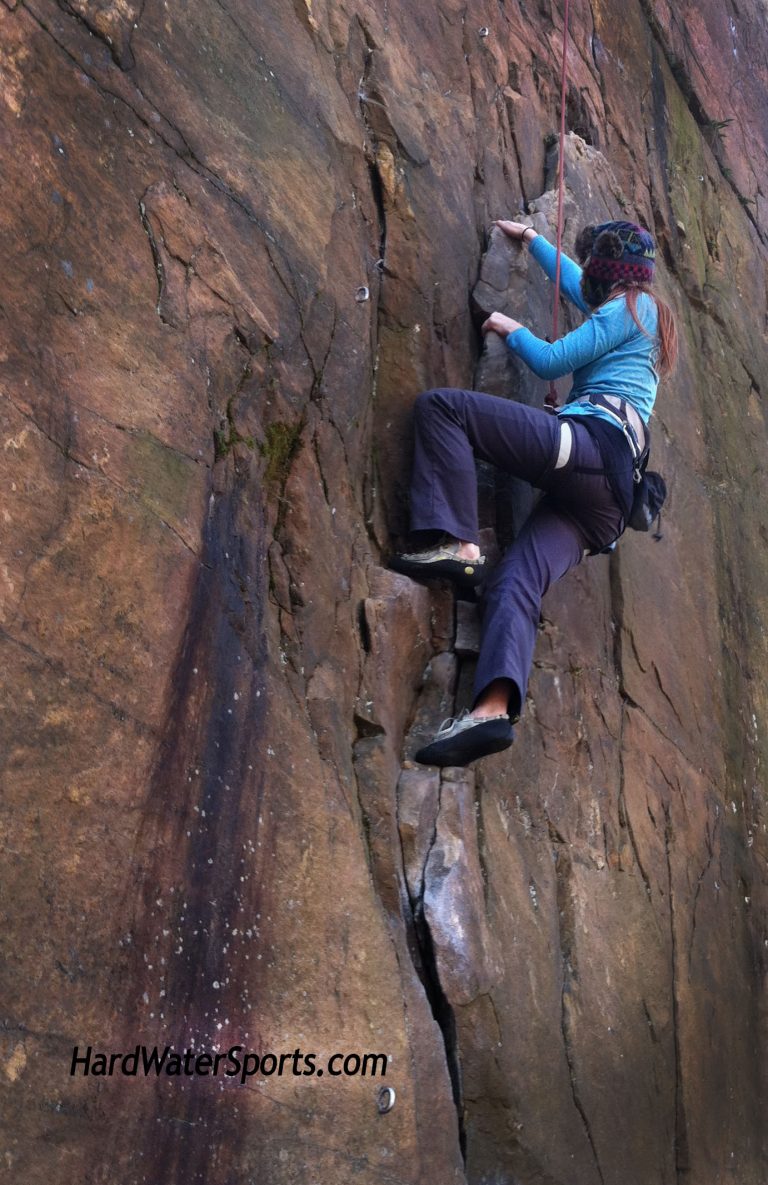
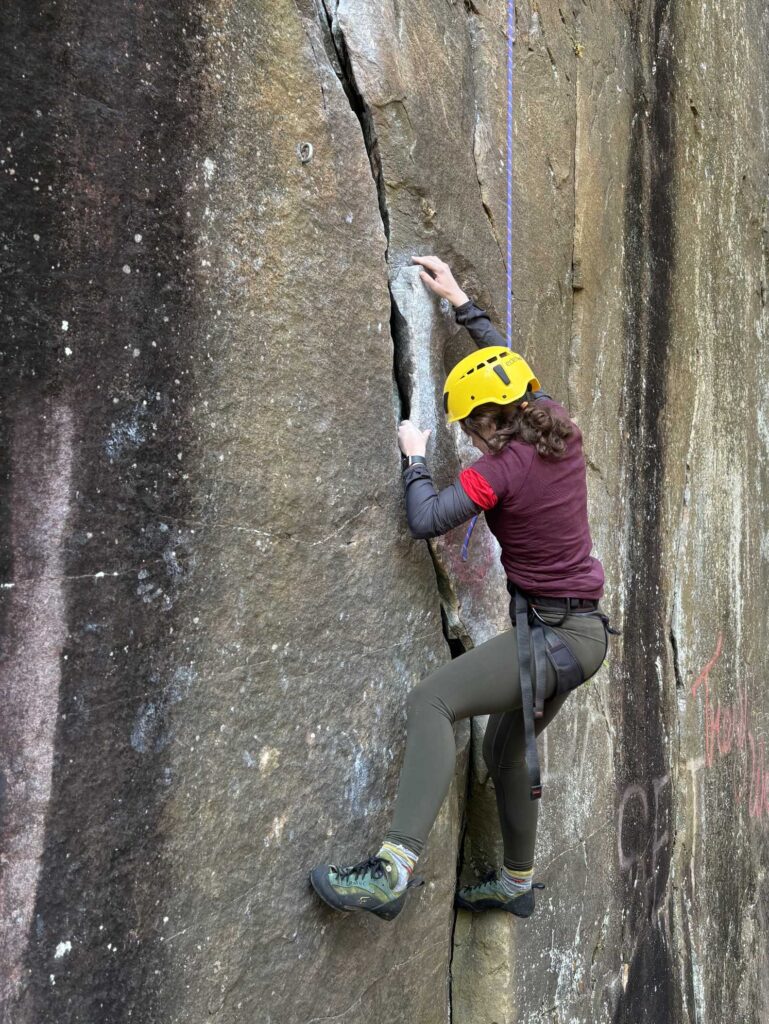
- The “Beta” of the Great Outdoors: Moving on real rock is different. There are no neon green holds to follow. Classes teach you how to “read” the rock, find hidden crimps, and trust your feet on friction smears.
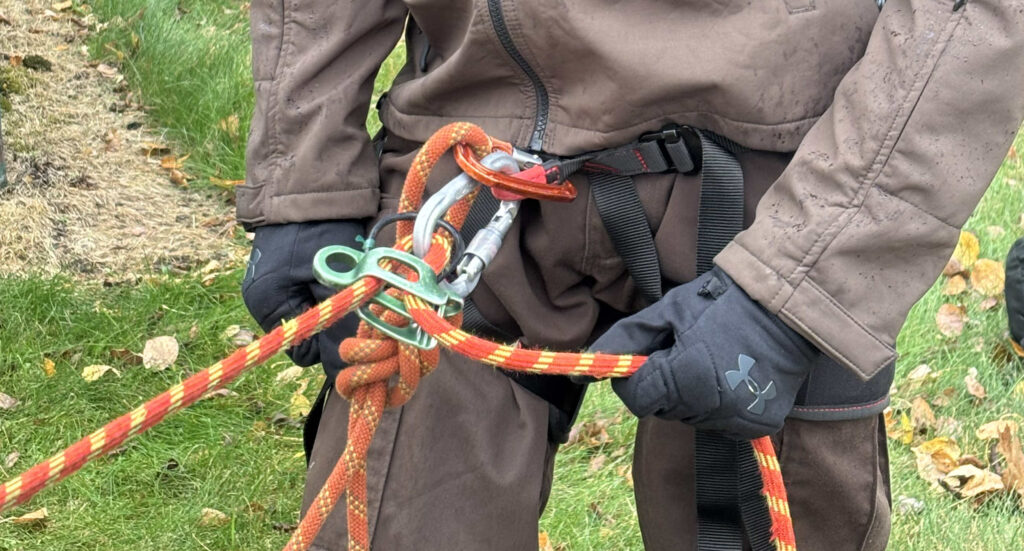
- Gear Knowledge: You’ll learn the difference between a nut, a cam, and a quickdraw—and more importantly, how not to drop them.
What to Expect on Your First Day
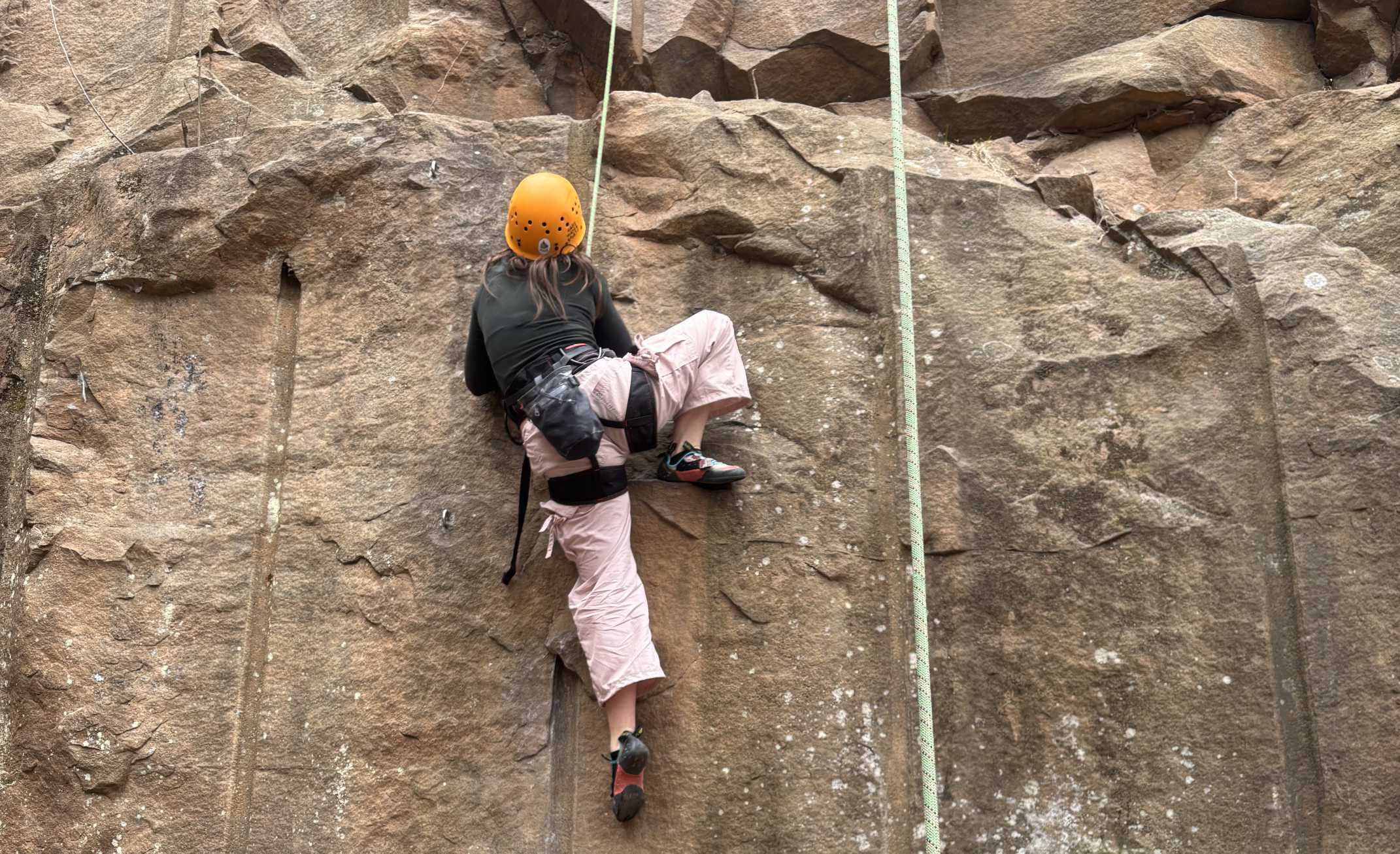
Don’t expect to be scaling El Capitan on day one. Beginner classes focus on Top-Roping, where the rope is already anchored at the top.
Signing up for a climbing class with Hard Water Sports you’ll have all the essential gear.
Essential Gear List
Hard Water Sports will provide all the gear (ropes, helmets, harnesses),
- Climbing Shoes: Comfort is king. You’ll be wearing them longer than you do at the gym.
- A Helmet: This is non-negotiable outdoors. It’s not just for falls; it’s for falling rocks or dropped gear from above.
- Harness, if you don’t have your own, we’ve got you covered.
What you should bring to the classs.
- Layers: The crag can be 10 degrees cooler than the parking lot. Bring a windbreaker and a warm “belay jacket.”
- Approach Shoes: Sturdy sneakers or hiking boots for the walk to the cliff. Flip-flops are a recipe for a twisted ankle.
- Water and snacks.
Pro-Tips for the First-Timer
- Trust Your Feet: In the gym, we tend to over-rely on our arms. On real rock, your legs are your best assets. Keep your weight over your feet!
- Leave No Trace: Outdoor climbing is a privilege. Pack out your trash, stay on the trails, and keep the music off.
- Don’t Chase Grades: A 5.8 outdoors can feel like a 5.10 indoors. Don’t let your ego get bruised if you struggle on “easy” routes; real rock is a different beast.
Where to Go? (Top Minnesota Beginner Spots for 2026)
If you’re looking for the best places to take a course this year, these spots are legendary for their beginner-friendly routs:
- Sandstone MN: Famous for its Ice Park, but also has high quality rock.
- Taylors Falls/Inter State Park: Known for its high-grade basalt and amazing scenery.
- Lake Superior North Shore: World class climbing on soaring sea cliffs overlooking the lake.
Ready to make the leap? Booking a half day intro course is the best way to see if the outdoor life is for you. Just remember: the goal isn’t just to reach the top—it’s to get back down safely and have a blast doing it.
Time to sign up for a climbing class – call 651 302 1774 for more info.